Between Sermons III

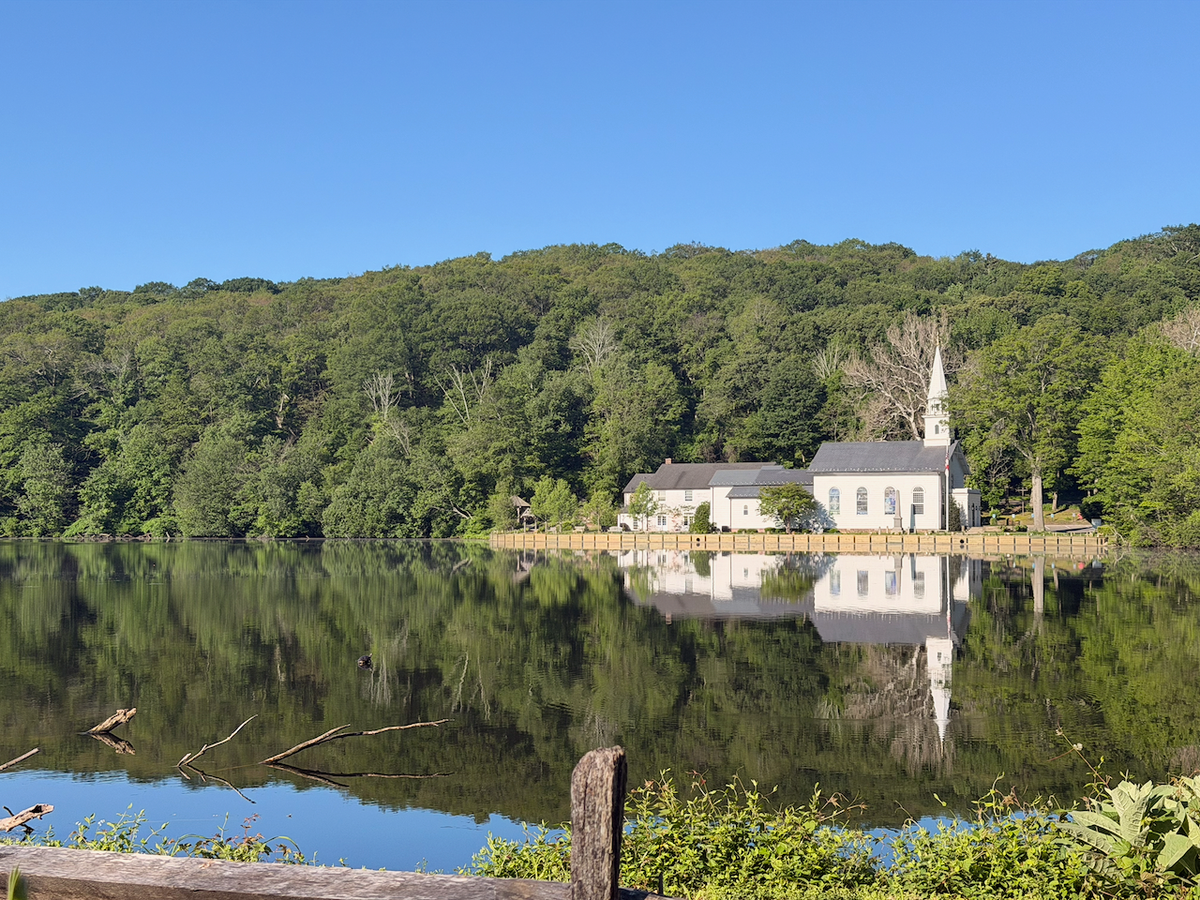
What the Water Carries
We have been saying this longer than we knew.
At every font, every Ash Wednesday, every altar, every graveside: the church has been enacting a theology it has not always been able to name. The practice has been more honest than the explanation that accompanied it. BlueGreen Theology is, among other things, the attempt to catch the theology up to what the liturgy has been doing all along.
Start with water.
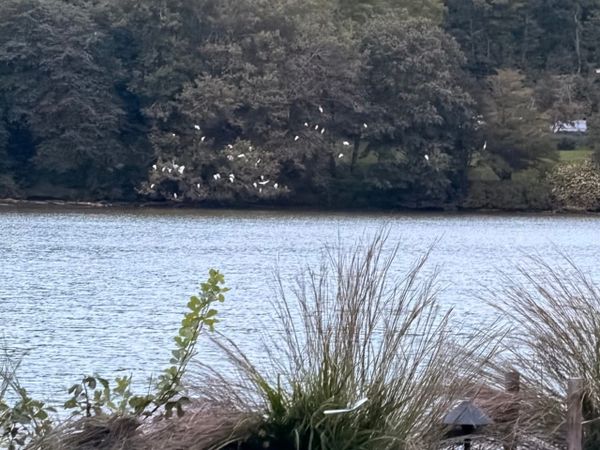
At St. John's, the water used in the baptismal font is returned to the pond after the service. It enters the Cold Spring River, moves north through the marsh, into Cold Spring Harbor, and out toward Oyster Bay. Every creature that water subsequently touches has been, in some sense, touched by the baptism. The newly baptized is connected not only to this congregation but to the entire downstream community of life. This is hydrology and theology saying the same thing.
We have begun announcing it after the Peace, once the congregation has enacted its unity with one another. The circle widens. It does not stop at the door.
Now consider what we do on Ash Wednesday. "Remember that you are dust, and to dust you shall return." We say it every year, pressing ash into every forehead in the room. It is easy to hear that as humiliation, a reminder of mortality, a call to repentance. It is that. But it is also something else. The Hebrew of Genesis is precise about this: the human is adam, formed from adamah. Earth-creature from earth. The wordplay is not decorative. It is a claim about what we are. We are animated earth. We do not stand above the community of creation. We are constituted by it. Every breath is borrowed. Every cell is watershed. The ash on the forehead is the adam/adamah truth enacted annually on every face in the room. Not as humiliation. As orientation. We are not visitors from elsewhere. We are this place, temporarily upright, being reminded of what we have always been.
And then the Eucharist.
Consider what is on the altar. A silver cup. A single loaf. The wheat that became this bread was grown in soil that took thousands of years to become soil, built slowly from the labor of worms and microbes and the patient decomposition of everything that died before it. The wine holds stellar minerals: iron, magnesium, calcium, elements forged in the collapsing cores of stars that burned and died long before our sun condensed from their dust. The light that warmed the vines in August left its source eight minutes before touching leaf and cluster.
To make this bread, God had to fashion the universe. To fill this cup, God had to enliven the stars.
When the Benedicite is sung, that great canticle in which sun and moon, fire and hail, mountains and hills, wild animals and flying birds are all summoned to the table, the assembly named is not a human assembly with natural illustrations. It is the full community of creation, with humans arriving last, joining a procession already ancient when we first drew breath. We are not hosting this gathering. We are being welcomed into it.
And at burial, soil. Scattered on the coffin. Or here at St. John's, cremated remains received into the memorial garden, returned to earth, completing the adam to adamah movement the tradition has always proclaimed. The earth that receives the dead also offers, in time, the beauty of what grows from it. Those who grieve discover that the community of creation does not stop at the human.
Four elements. Four moments. One continuous claim: we are made of creation, sustained by creation, and returned to creation. The church has been saying this at every threshold of human life.
BlueGreen Theology is the name for finally meaning it.
Thomas Berry, a Catholic priest and scholar who spent his career thinking about the relationship between humanity and the rest of the living world, wrote that we need to understand the universe as a communion of subjects, not a collection of objects. He was right. And the tradition he worried had grown too small to say it has, in fact, been enacting it every time we gathered at the font, the altar, the imposition of ashes, the graveside.
We did not know what to call it.
The water returns to the pond. The dust is the ground. The bread holds the stars. The soil receives us at the end. We have been practicing creaturely solidarity, membership in a congregation larger than the human, every time we gathered. The pond has been part of this parish's worship since 1831. BlueGreen Theology is the attempt to honor what that means.
This is the third in a series of four pieces.