Wintering

All season we heard the osprey before we ever saw them, that high, sharp cry coming down through the sycamore by our house, or from the trees along the earthen dam, which they love. Then the day's work began. They hit the pond all day, folding up and going in with a splash I could hear from the kitchen when the door was open. Then they rise with silver catch, shaking off the water on the way back to the branch. Vigorous is the polite word. They were loud about being alive.
I don't know the day they left. That is the strange part. There was no last sighting, no farewell overheard. The splashing thinned the way leaves thin, a little less each week, and then one morning the pond was calm, the sycamore was a tree, and I caught myself listening for a cry that was not coming. Gradual until sudden. Most of what leaves us goes that way.
Into the quiet, a second voice has moved. The red-tail has been calling over the pond, that long tearing skree, and he seems louder lately, bolder, riding the open air. I can't tell you the osprey's leaving is the reason. They eat different things. I can tell you the sky has a different sound, and the water is less turbulent than it was in August.
Here is what I do know about the osprey. Researchers who tagged Long Island birds with small satellite transmitters followed them to Venezuela and northern Brazil. The young ones stay down there a year and a half before coming north again. They keep faith with the same stretch of shore, and with the same winter water, year after year. Two homes, both kept faithfully.
This one is empty now, that one has yet to receive them.
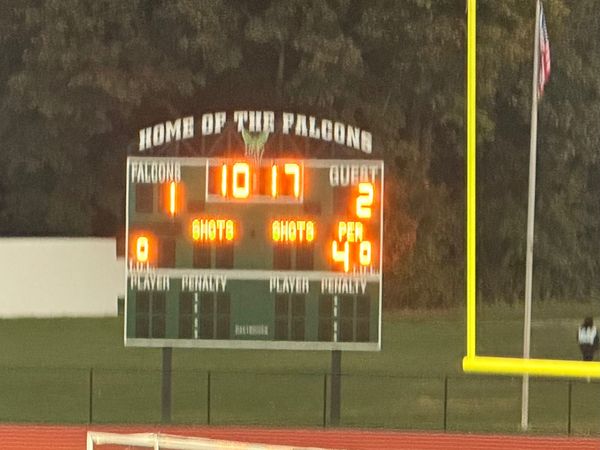
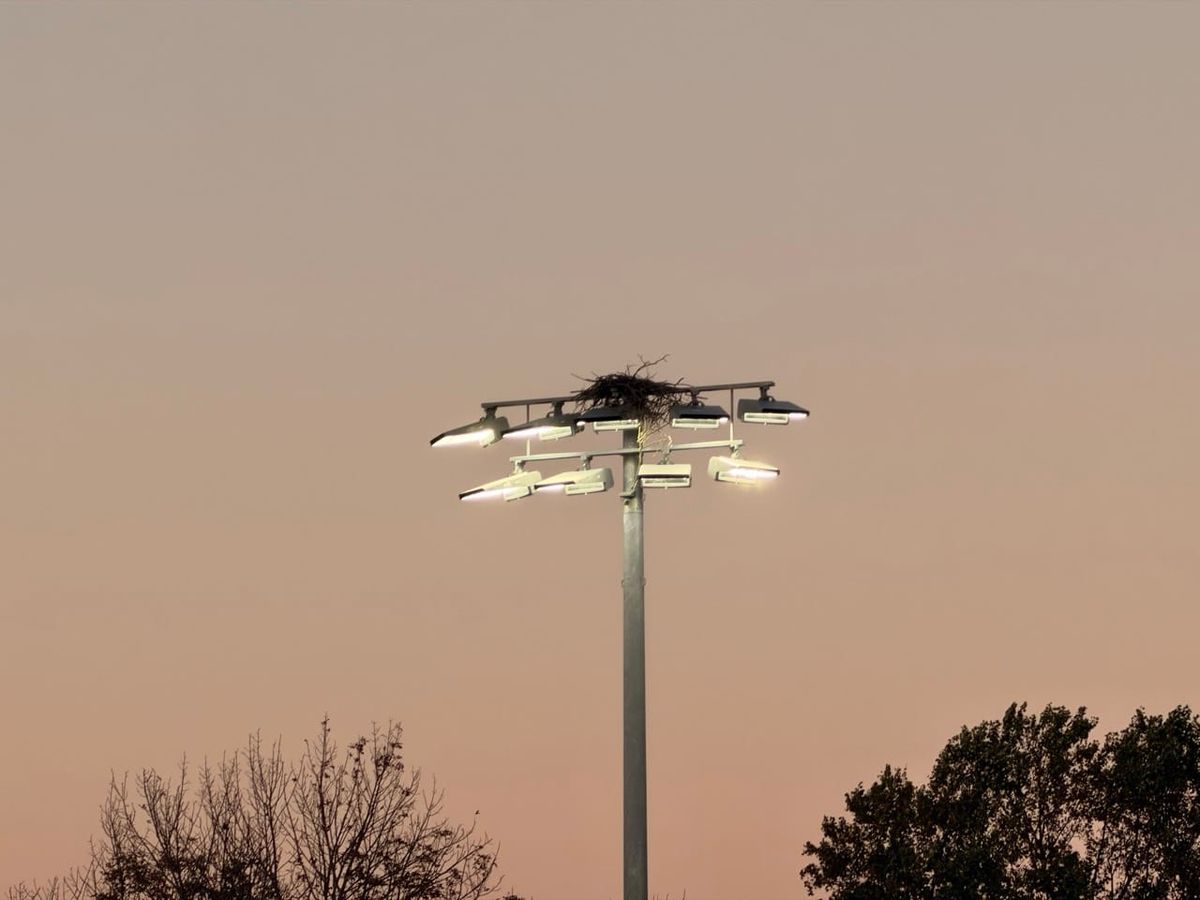
Peyton's field hockey season is ending, and last week we stood at Locust Valley High School for what was supposed to be a game. The referees never came, so it became a scrimmage under the floodlights. High on the pole, above the lights, sat an osprey nest with no osprey. The lights burned for us, and the nest waited above them in the dusk.
Byrd has been rowing in the cold, the practices getting colder and the evenings shorter, and still no racing. A regatta or two, we are told. Still to come.
Weeks of pulling toward a finish line that has not appeared, and Byrd sits with her back to it the whole time, watching only the water she has already crossed. If a regatta comes, she will be the first one across the line, facing the wrong way.
Rowing backwards, moving forwards.
Practice is hard work no one sees. The osprey are somewhere south, getting through the winter. Here the sycamore stands, and the trees along the dam, and the water still holds fish. People once built poles for these birds when the island had nearly lost them, and the birds came back.
I don't have to keep watching the sky to believe in March. I have to keep the sycamore and the dam trees standing and the water fit to come home to.
A Prayer
God of the far water and the near, who keeps the osprey through a winter we cannot see and keeps faith with us in every practice that has no race: teach us to row backwards into the cold, moving forward with no finish in sight, to leave the sycamore standing and the water fit to come home to, and to trust that what has gone south has not gone from you. Through Christ, who wintered in the dark and came home by morning. Amen.