Between Sermons
Part One: Something Already Singing
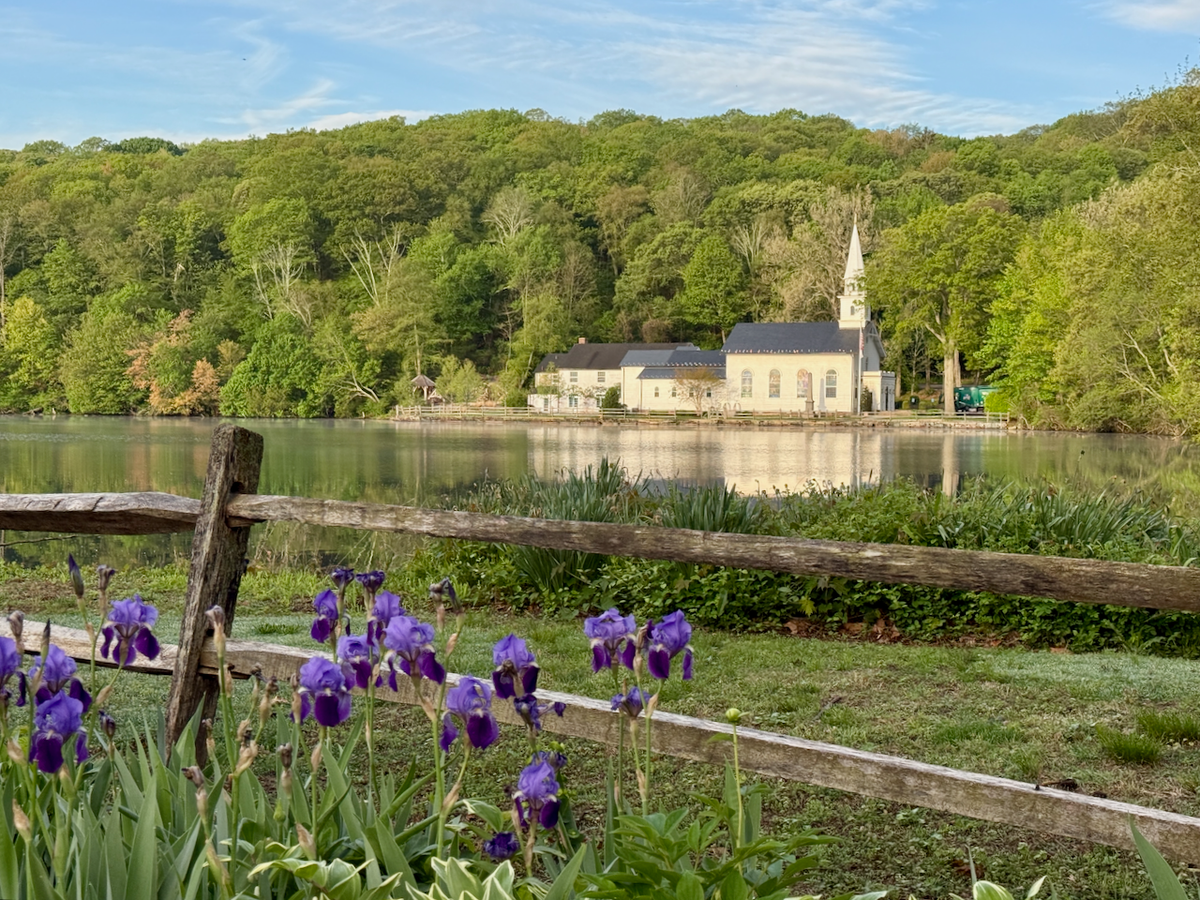
Between sermons, I have been working on something. It started nearly ten years ago in a conversation with our then Curate, Jesse. It started, as most things here eventually start, at the water's edge.
We were thinking about ways to engage our whole community in deeper reverence for our grow-to-give garden. As I prayed about it, I realized the vision was beautiful. But it wanted to grow.
I was leaving the church on a Thursday afternoon in March and heard the spring peepers for the first time that year. Small voices rising from the shallows. Cold air. The daffodils just coming up. The swans back at the nest. A hard wind pushing against every sign of spring. The peepers did not negotiate with the wind. They simply sang.
I stood there longer than I meant to.
St. John's Pond has been doing this since long before we arrived. Since before Cold Spring Harbor had a name. Since before there were human ears to receive it as anything at all. The peepers were not performing for me. The pond does not require our attention to be what it is. Something is happening here that is not about us, has not waited for us, and will not stop when we leave.
That is the thing I have been working on.
Nearly ten years now watching this pond freeze and thaw. The brook that feeds it carves winter channels through October sedge. At the marsh's northern edge, where Cold Spring River starts its run to harbor, great blue herons stand motionless in September shallows.
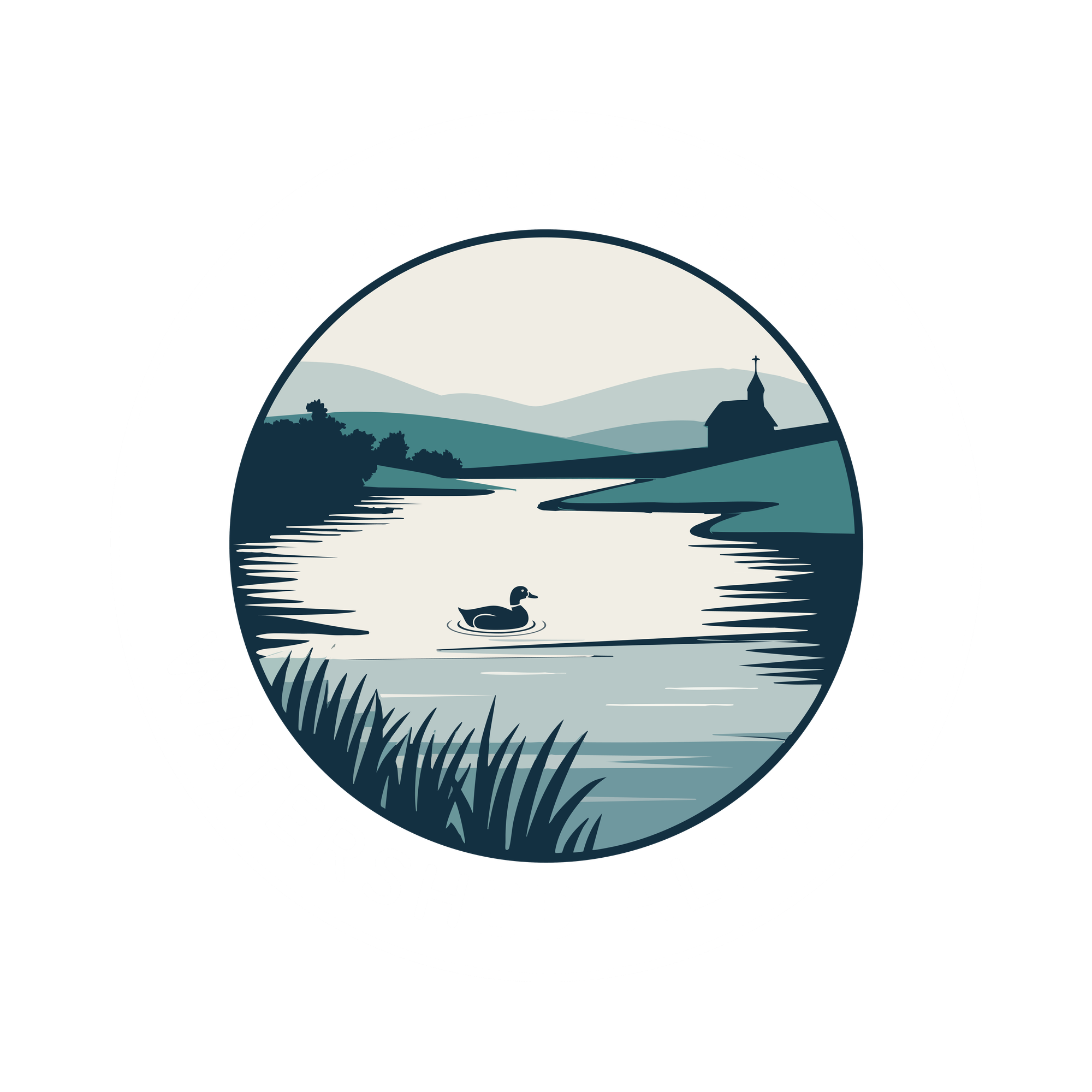
I call this BlueGreen Theology. Blue for the pond's surface tension holding mayflies at dawn. Green for the Phragmites australis that has taken the marsh's edge, crowding out what grew there before, surviving every winter, returning every spring. Not nature as abstraction. Not the environment as political cause. This cattail stem. This snapping turtle's mud-slick shell. This exact osprey returning each April to hunt from the cross in our steeple.
The tradition speaks of revelation through text, through history, through reason. But here instruction arrives in forms the church has not learned to read. A great horned owl calling across December ice. Spring peepers beginning their chorus while snow still covers the access road. Teachers we have refused as teachers, speaking in frequencies we have trained ourselves not to hear.
The work has produced three academic articles (one on prayer, one on what it means to be human alongside the rest of creation, one more academic version of this), a longer manuscript still in progress, and the Sunday podcast series some of you have been listening to. It has sent me back to Genesis and the Psalms with different questions than I brought before. It has changed how I understand what we do at the font and the altar and the graveside.
I want to share some of it with you. Not the academic version. The version I actually believe. The one that starts at the water's edge on a Thursday in March with something singing that cannot stop.
Here is the simplest way I know to say what I have learned:
The pond is already alive before God. Not because we have prayed over it or paid attention to it or declared it sacred. It simply is.
Peepers praise in the shallows. Wood duck nests in cattails at the northeast corner. Heron stands at the edge, unbothered by ambiguity. The pond pulses with what was never absent.
Psalm 148 summons sea creatures. Mountains. Flying birds. Storm wind. Each called to praise directly, not as metaphor, not on our behalf. As themselves. The grammar is not figurative. The assembly breathes. The assembly is real.
We are the newest members of it.
That is not a diminishment. It is, I think, an invitation. If the pond has been praising since before the parish existed, then our work is not to make it sacred. Our work is to learn to recognize what is already happening, and to take our place in it. That requires a different kind of attention than most of us were formed to pay.
Over the next few weeks I will share three more pieces from this work: on what it means that creation praises; on how our own liturgical practices have been enacting this all along, whether we knew it or not; and on what the pond is actually asking of us.
For now: if you find yourself in the meditation garden, sit for a moment with the pond. It does not require anything of you. Neither does this. Just be there. Something has been singing since long before the parish existed, and it has not stopped. That is where this starts.
Part Two: The Assembly
We tend to think of worship as something humans do.
We gather. We sing. We pray. We listen. The building holds us, the liturgy shapes us, and what happens in that hour on Sunday morning is, we assume, the point. The rest of the week is what we return from. The rest of creation is the backdrop.
The pond disagrees.
In March, before the ice was fully gone, I watched a swan working at the edge of the gray surface. It was pressing its long neck down through the last of the freeze, reaching for food beneath. It did not register the ice as an obstacle. It was eating breakfast. The conditions were what they were. The swan's vocation was what it was. The remaining ice was a minor logistical detail somewhere between the two.
I have been thinking about that swan ever since.
What BlueGreen Theology calls unselfconscious participation is what the swan was doing. Not striving toward God. Not choosing worship. Simply and entirely being what it is, in the place where it is, doing what it was made to do. And in that, according to Scripture and according to the theology I have been trying to recover, something is happening before God that does not require our presence to be real.
Psalm 148 is the text I keep returning to. The psalmist summons the sun and moon, the sea creatures and ocean depths, the mountains and hills, the fruit trees and cedars, the wild animals and flying birds to praise God. Directly. Not as metaphor. Not on humanity's behalf. The psalm does not say these creatures remind us of God, or that they provide evidence of God's power. It says they praise. It addresses them as participants in a community of worship that exists whether or not any human is present to observe it.
The grammar is not figurative. The assembly is real.
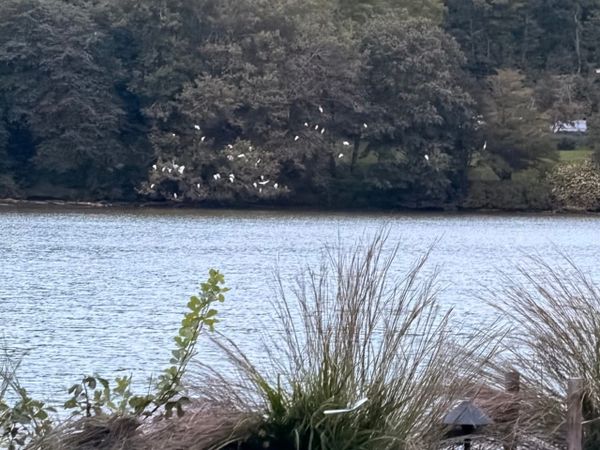
The wood duck (Aix sponsa) nesting in the cattails at the northeast corner of the pond is in that assembly. The hooded merganser (Lophodytes cucullatus) riding the open water in winter. The great blue heron (Ardea herodias) standing at the edge, present in whatever the pond is today, entirely unbothered by ambiguity. Elodea nuttallii spreading across the summer shallows. The American eel (Anguilla rostrata) pressing against the dam from below, following an instinct older than the parish, older than the town, older than the European presence on this continent. The muskrat (Ondatra zibethicus) motors through the summer surface trailing its triangular wake. Everyone thinks it is an otter. It is not. But it does not mind. The North American river otter (Lontra canadensis) we almost never see. It leaves evidence: a latrine at the water's edge, confirmed last December, which means it has been here all along, moving through the dark, signing its name in the mud.
All of it already alive before God. Already doing what the Psalms say it does.
This is not a lesser form of worship because it is not conscious. It is differently whole. The river flows in God's presence without the self-awareness that might generate doubt. The tree grows in divine sustenance without the capacity for self-examination that produces anxiety. Creation's unselfconscious praise is not inferior to what we manage on Sunday morning. In crucial ways it is more integrated with the divine presence than what human self-awareness typically achieves.
We are the newest members of this assembly. Genesis makes that plain. The light, the waters, the dry land, the plants, the creatures of sea and sky and earth: each declared good before any human observer exists to evaluate it. When humans finally appear, on the sixth day, they arrive into a world that is already good. They do not make it good by arriving. They are last. Not the culmination. The last.
What this changes is not small.
If the pond is already alive before God, if the peepers are already praising, the wood duck already in its vocation, the heron already attending, then environmental destruction is not only the loss of beauty, or of ecosystem services, or even of species we might have needed. It is the silencing of voices in an assembly. It is a theological event. We sin not against passive matter but against creatures already living in God's presence, already doing what the Psalms say they do.
And our work here: the restoration work, the watershed work, the patient and unglamorous labor of improving water quality and removing invasive species and, God willing, installing a fish passage so the eel and the alewife and the river herring can reach the water they have been trying to reach for centuries. That work is not management. It is not even stewardship, exactly, though stewardship is better than nothing. It is more like clearing a space in the assembly that we ourselves blocked. Making room for voices we silenced. The pond was praising before we arrived. Our work is to learn to recognize the congregation we are already part of, and to act like it.
The swan does not know any of this. It was eating breakfast.
That, too, is instruction.
Part Three: What the Water Carries
We have been saying this longer than we knew.
At every font, every Ash Wednesday, every altar, every graveside: the church has been enacting a theology it has not always been able to name. The practice has been more honest than the explanation that accompanied it. BlueGreen Theology is, among other things, the attempt to catch the theology up to what the liturgy has been doing all along.
Start with water.
At St. John's, the water used in the baptismal font is returned to the pond after the service. It enters the Cold Spring River, moves north through the marsh, into Cold Spring Harbor, and out toward Oyster Bay. Every creature that water subsequently touches has been, in some sense, touched by the baptism. The newly baptized is connected not only to this congregation but to the entire downstream community of life. This is not poetry. It is hydrology and theology saying the same thing.
We have begun announcing it after the Peace, once the congregation has enacted its unity with one another. The circle widens. It does not stop at the door.
Now consider what we do on Ash Wednesday. "Remember that you are dust, and to dust you shall return." We say it every year, pressing ash into every forehead in the room. It is easy to hear that as humiliation, a reminder of mortality, a call to repentance. It is that. But it is also something else. The Hebrew of Genesis is precise about this: the human is adam, formed from adamah. Earth-creature from earth. The wordplay is not decorative. It is a claim about what we are. We are animated earth. We do not stand above the community of creation. We are constituted by it. Every breath is borrowed. Every cell is watershed. The ash on the forehead is the adam/adamah truth enacted annually on every face in the room. Not as humiliation. As orientation. We are not visitors from elsewhere. We are this place, temporarily upright, being reminded of what we have always been.
And then the Eucharist.
Consider what is on the altar. A silver cup. A single loaf. The wheat that became this bread was grown in soil that took thousands of years to become soil, built slowly from the labor of worms and microbes and the patient decomposition of everything that died before it. The wine holds stellar minerals: iron, magnesium, calcium, elements forged in the collapsing cores of stars that burned and died long before our sun condensed from their dust. The light that warmed the vines in August left its source eight minutes before touching leaf and cluster.
To make this bread, God had to fashion the universe. To fill this cup, God had to enliven the stars.
When the Benedicite is sung, that great canticle in which sun and moon, fire and hail, mountains and hills, wild animals and flying birds are all summoned to the table, the assembly named is not a human assembly with natural illustrations. It is the full community of creation, with humans arriving last, joining a procession already ancient when we first drew breath. We are not hosting this gathering. We are being welcomed into it.
And at burial, soil. Scattered on the coffin. Or here at St. John's, cremated remains received into the memorial garden, returned to earth, completing the adam to adamah movement the tradition has always proclaimed. The earth that receives the dead also offers, in time, the beauty of what grows from it. Those who grieve discover that the community of creation does not stop at the human.
Four elements. Four moments. One continuous claim: we are made of creation, sustained by creation, and returned to creation. The church has been saying this at every threshold of human life.
BlueGreen Theology is the name for finally meaning it.
There is a theologian named Thomas Berry, a Catholic priest and scholar who spent his career thinking about the relationship between humanity and the rest of the living world, who wrote that what we need most is to understand the universe as a communion of subjects, not a collection of objects. He was right. And the tradition he worried had grown too small to say it has, in fact, been enacting it every time we gathered at the font, the altar, the imposition of ashes, the graveside.
We simply did not know what to call it.
The water returns to the pond. The dust is the ground. The bread holds the stars. The soil receives us at the end. We have been practicing creaturely solidarity, membership in a congregation larger than the human, every time we gathered. The pond has been part of this parish's worship since 1831. BlueGreen Theology is the attempt to honor what that means.
Part Four: The Work That Remains
The snapping turtles come out of the pond in early summer.
They come out with mud still caked on their backs. Prehistoric, unhurried, entirely unbothered by the churchyard they are crossing. They have been doing this on this ground since before the parish existed, before the town had a name, before there were human eyes to watch them. They move through the grass to lay eggs in the earth. The water's work deposited in the ground. The pond extending itself into the soil. The whole cycle continuing without our assistance or our blessing.
I never get tired of watching them.
There is a dam at the northern edge of St. John's Pond. It has been there long enough that most people who walk past it do not think of it as a choice. It is simply part of the landscape. But below it, pressing against the current, the American eel is trying to reach water it has been seeking for as long as eels have been eels. The alewife and the river herring are trying to make the same passage. They cannot. The dam is what we built. The exclusion is what we maintain, mostly by not thinking about it.
One of the things BlueGreen Theology has clarified for me is that the dam is not only an engineering problem. Every theological framework that places the human at the center, every formation that trained people to look past the pond, to treat the eel's excluded passage as someone else's concern, is a dam. It blocks what would otherwise flow. The work of restoration is not building something new. It is removing what we have placed in the way, and installing what allows the passage that was always meant to happen.
We have spent time and money removing walls that keep us from nature. From the woods behind us, from the pond beside us. But the dam remains. The work of installing a fish passage so the eel and the alewife and the river herring can reach the pond they have been trying to reach for centuries is not a different kind of work than what we do for one another. It is the same care, extended to its actual radius. The same wonder that draws us to a child at the font draws us to the water that will receive that child's baptism. The same reverence we bring to a graveside we bring to the soil that receives what we return to it. What we shape shapes us. The congregation we are learning to serve is simply the one we have always belonged to.
Thomas Berry called this transition, from a period of human devastation of the earth to one of mutually enhancing human-earth relations, the Great Work. He was right about the urgency. The assembly is thinning. The silence where species were is a theological emergency as well as an ecological one. But the work looks different when God is understood as the central actor. It is not cosmological optimism. It is resurrection faith applied to the watershed. We are not initiating something. We are joining something already underway.
The skunk cabbage pushes through frozen ground in February, generating its own heat, before anything else has decided that spring is possible. The fish return to the surface in late May, visible again after their winter depth. The turtles cross the churchyard in June, mud on their backs, entirely certain of where they are going. The pond does not wait for our theology to catch up with what it is doing. It simply continues.
This is what I have been working on between sermons. Not a program. Not a campaign. A way of seeing: one that the tradition has always had the resources to offer, and has not always offered. A lens that makes visible what has been there all along. The congregation at the water's edge. The assembly that was praising before we arrived. The Great Work already underway in the shallows and the marsh and the slow movement of water toward the sea.
The question BlueGreen Theology puts to this parish is not whether we care about the environment. It is simpler and harder than that. It is: what would it mean to mean what we do at the font, the altar, the imposition of ashes, the graveside? What would it mean to learn the names of our neighbors, the wood duck, the snapper crossing the churchyard in June, the eel pressing against the dam from below, and to greet them as the assembly they are?
The pond is doing what it does. It has never stopped.
Our work: to join it.
Coda: Not Only Ours
Over the years, my parishioners have said some version of the same thing to me. They say it a little shyly, as if it might be theologically suspect. I feel closer to God outside. In the garden. On the water. Walking in the woods. Something happens there that doesn’t always happen in the building.
I heard it often enough that I stopped treating it as a footnote and started treating it as data. I was not the first to notice.
Francis of Assisi knew this in the thirteenth century. Sun: brother. Moon: sister. Wind: brother. Water: sister. The church calls this poetry. Francis called it accuracy.
Eight centuries of garden ornaments have buried the taxonomy. But the wolf came down from the mountains to Gubbio, and Francis walked out to meet it. No sword. Just a man approaching the thing that could tear his throat. They stood together in the space between village and wilderness. The assembly formed.
It was not a metaphor. The creatures are kin. The human is not the center. The wolf did not teach him this through safety. It taught him through the terrible honesty of standing close enough to die.
Morning light finds the sparrow at its feeding, the oak leaf turning toward sun. No prayer book required.
The creatures assemble without announcement, without explanation. Beetle and wren. The slow unfurling of bracken fronds, water pooling in muddy hollows. We step outside and see it: the vast liturgy already in progress. Here is worship as fact, not concept. Here is the thing itself. The building draws our attention inward to word and symbol. The watershed draws it outward to the ten thousand moving parts of praise. Stone, root, wing. The assembly that has no walls.
That is what this series has been trying to say.
Look at what we have built between ourselves and it. Walls. Parking lots sealed against rain. Lights that have erased the stars so thoroughly that most of our children have never seen the Milky Way. We did not intend to wall ourselves off from the liturgy. But we did.
St. John’s Pond is where I learned it. The specific creatures, the particular water, the otter signing its name in the mud: none of that is illustration. It is the theology itself, learned from this place over nearly ten years. You cannot do this work in general. You have to begin somewhere.
But you can begin anywhere.
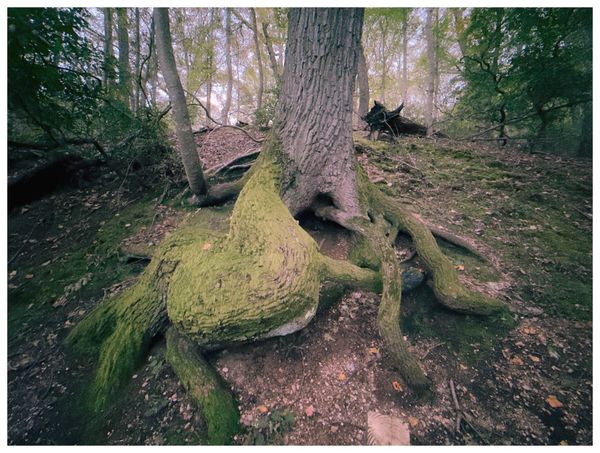
Any parish with a tree older than the building has a teacher. Any congregation near a creek, a marsh, a harbor, a vacant lot where something is growing through the concrete: the assembly is already gathered there. The grammar of animacy is not a Long Island theology. It is available wherever a creature is doing what it was made to do.
Which is everywhere.
Which is always.
What BlueGreen Theology offers is not a program to be imported. It is a question to be asked locally: what is already praising here, before we opened the doors? What have we been walking past? What has been here longer than we have, doing what the Psalms say creation does, waiting for the congregation inside to notice it is not the only congregation?
The pond taught me to ask that question. Whatever is outside your door can teach you the same thing.
Go and look. Listen first. The liturgy has already begun.
-The Very Rev. Gideon L. K. Pollach is Rector of St. John’s Episcopal Church, Cold Spring Harbor, New York, and founder of the BlueGreen Theology Project.