Two Processions (Palm Sunday)
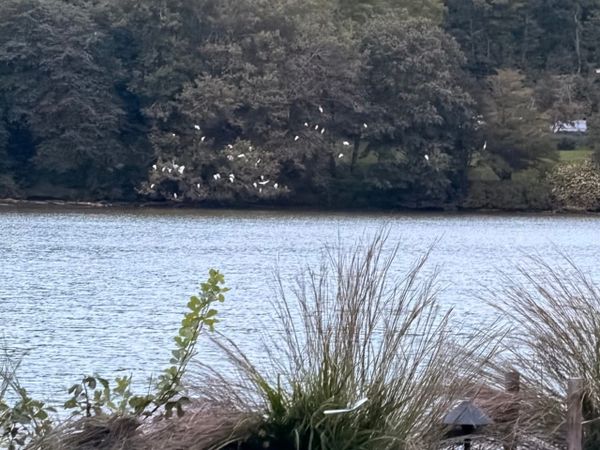
This week a sure sign of spring: the spring peepers appeared on Thursday. I heard them for the first time as I left the church in the afternoon, small exaltations rising from the water's edge, declaring something we cannot understand but that they cannot stop saying.

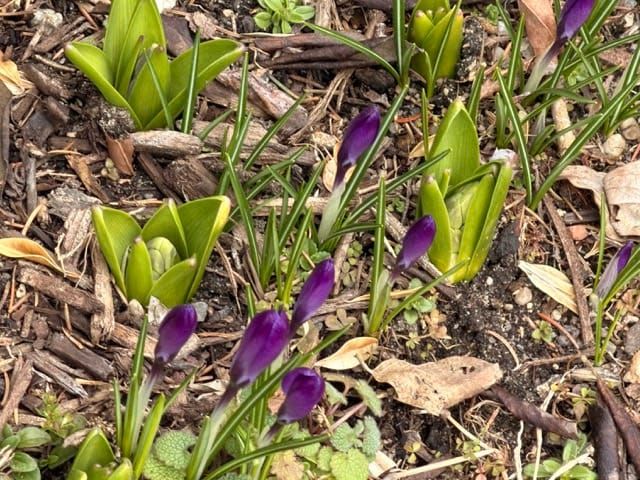
This week a sure sign of spring: the spring peepers appeared on Thursday. I heard them for the first time as I left the church in the afternoon, small exaltations rising from the water's edge, declaring something we cannot understand but that they cannot stop saying. The daffodils are making their first appearance. Grape hyacinth has found the sunny corners. The swans are back at their nest, fierce and watchful. And still the cold wind returns, sharp and persistent, pushing back against every sign of life. But the peepers don't negotiate with the cold. They simply sing. It sounds like Hosanna. Hosanna. Hosanna.
They made me think about processions. About two very different theologies of life, moving toward the same city from opposite directions. Two thousand years ago, in the same spring week, two processions entered Jerusalem.
The first was Pontius Pilate's.
Every spring, the Roman governor rode in from the west: cavalry, foot soldiers, leather armor, the imperial eagle on the standards. His was a deliberate demonstration. The message was not subtle: Rome is in charge. Resistance is futile. We hold the power of life and death, and we will use it. Pilate's procession was a theology as much as a military maneuver. It announced that the world is ordered by force, that safety comes from domination, that the only thing standing between civilization and chaos is the iron will of those strong enough to wield force.
The second procession came from the east. No cavalry. No armor. A borrowed donkey. A crowd cutting branches from the trees and spreading cloaks on the road, the most improvised, underfunded royal welcome imaginable. And at the center of it, the man from Galilee who, when the religious authorities told him to silence the crowd, said simply: if they were quiet, the stones themselves would cry out.
Most of us, when we are honest, find Pilate's logic more familiar than Jesus's. Control feels like safety. Holding on feels like love. The tighter the grip, the more secure the future. It makes a kind of terrible sense, especially when what you are holding onto is something you cannot bear to lose.
This week I was on another college visit with my son Wood. Walking across that campus with him, watching him imagine his own future, I felt something I recognized immediately, because I have felt it before. My daughter Abigael has already gone off to college. So this road is familiar. I remember what it costs, what it takes, and what it leaves behind.
I was in the room when Wood was born on April 3rd, eighteen years ago this week. I remember how frightening that was, how much was at stake, how little I could do, how life was sprinting through that moment with a force entirely its own.
And so was death.
It was a narrow window. This year his birthday falls on Good Friday. Fitting.
Standing on that campus, what I felt wasn't the same intensity. But it was the same foreboding. And underneath that foreboding was something else: the knowledge that this is not the last time Sarah and I will do this. Next Peyton, then Byrd. Four children, four thresholds. We are not at the beginning of this road. We are already on it, eyes open, and we can see exactly where it goes.
Jesus rode into Jerusalem the same way. The cross was not a surprise. It was the consequence of a radical life of generosity. He could see it from the back of the donkey. He went anyway, not because the pain wasn't real, but because turning back would have meant choosing the other procession. Choosing force over love. Choosing the tightened grip over the open hand.
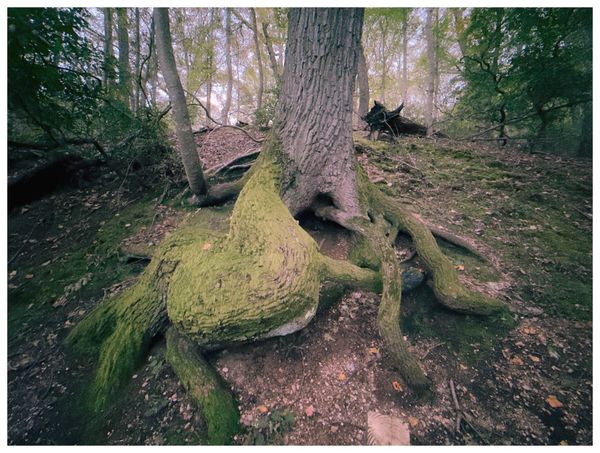
This is, it turns out, the pattern of everything. The acorn must stop being an acorn to become an oak. The caterpillar dissolves entirely inside the chrysalis before becoming a butterfly, not a gentle transition, but a complete surrender of one form so that another can emerge. Every seed goes into the ground and dies to what it was. Creation has always known this. The whole watershed runs on it. Nothing gets to skip the dying part. Nothing becomes what it is meant to be without first releasing what it was.
The difference is that we know what we are doing. The oak doesn't grieve the acorn. But we grieve. We can see the pattern of life, name it, feel the full cost of it, and choose it anyway. That knowing, that conscious participation in what creation has always practiced without thinking, is what makes human love both harder and more deliberate than anything else.
It is also what makes it holy.
Pilate's answer to that pain is the procession from the west: control life, suppress pain, make it stop. Jesus's answer is the procession from the east: move through it, open-handed, trust that what is being born on the other side is worth what the crossing costs. St. Paul called it labor. Not metaphorical labor. But the kind that is frightening and costs nearly everything and ends in something you could not have imagined before it arrived.
The pond is practicing that same trust right now. The daffodils keep appearing. The grape hyacinth holds its color against the cold wind. The swans guard what is not yet born. And the peepers, the peepers simply will not be silenced. They don't know about Pilate. They don't know about the cross. They only know what creation has always known: that life is the direction, and that the singing is not optional.
Together, we have been at this pond since January. We watched it locked under ice, and learned that life was moving beneath the surface even when we could not see it. We stood in the snowstorm and discovered that what inconveniences us becomes the water that sustains everything later. We walked through the mud of early Lent and found that the mess and the revelation arrive together. We watched the swans claim their corner and learned that making room for life sometimes requires a fierceness we didn't expect.
Week by week, the pond has been teaching us the same thing in different registers: that life does not need our permission. That the gift arrives before we are ready to receive it. That the groaning of creation, the groaning of the watershed, and the groaning of our own hearts are, somehow, bound together.
And now we arrive at a new frontier. Now we arrive at the gates of Jerusalem.
We enter this Holy Week knowing where the road goes. We know that Pilate's procession will, for a few terrible days, appear to win. But we have been watching the pond long enough to know that life has a stubbornness that force cannot finally answer. The acorn does become the oak. The chrysalis will open. The daffodils do come back. And on the far side of a borrowed tomb, the procession from the east begins again, and this time, it will not end.
This week, if you find yourself holding something too tightly, a child, a future, a fear, let the pond remind you what open hands look like. The pain of letting go is real. But so is the life revealed beyond it.
A Prayer:
God of the tentative spring, who brings life forward not through force but through longing: teach us the courage of open hands. We confess how easily we choose the wrong procession, the one that promises safety through control, that mistakes a tightened grip for love. Turn us. Turn us toward the east. Turn us toward the borrowed donkey and the branches and the crowd that will not be silent, because if they were, the stones would cry out. May we enter this Holy Week not as bystanders but as participants, pond-creatures, dust-creatures, creatures of the watershed, trusting that what dies in the ground will not stay there. With Christ, who rode toward the cross the way spring rides towards the cold: not forcing, not retreating, but moving forward in the deep confidence that life is the last word. Amen.