Two Calls

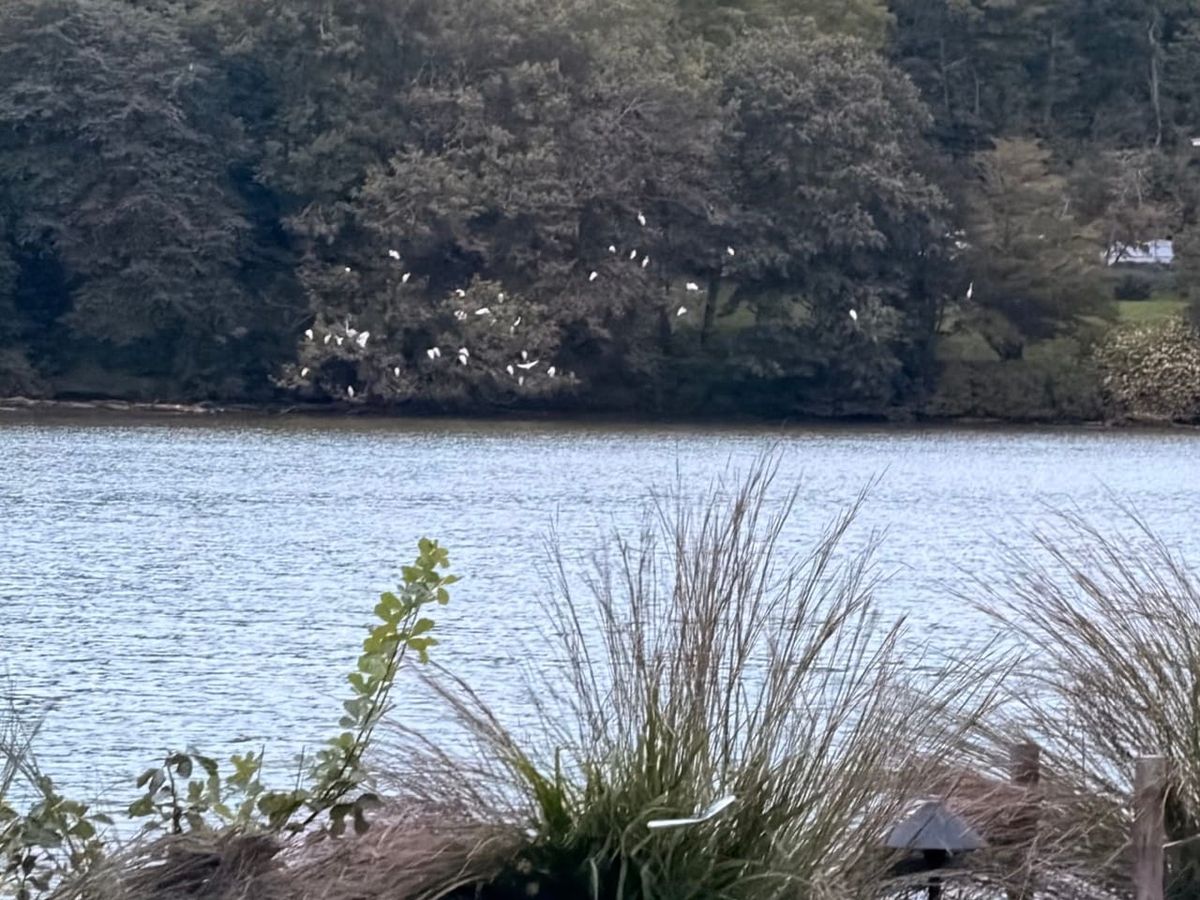
I was at a table with friends, stuffing auction brochures and donor lists into programs for the fundraiser — the kind of work that's more useful than it is interesting, the sort that's easier with many hands and something to talk about while you do it. My phone rang in the middle of it. Wood, calling from Ithaca. I got up from the table and stepped outside, telling my friends I needed the signal. I'm not sure that was the whole reason.
We talked about nothing important: his classes, a paper, whatever ordinary thing a day holds when you're eighteen and away from home for the first time. I stood facing the water, half-listening to my own side of the conversation, when I saw them. The egrets, arriving. Dozens of white wings converging on the same branches from the harbor all at once, all together, none of them waiting for the others to go first.
I've watched that roost for years and thought I already knew what I was looking at. Apparently every birder on this pond has known for a long time that egrets arrive at a roost together, not one by one. I just hadn't stood still long enough, at the right moment, to see it for myself. It took my son calling from three hundred miles away to make me stop and actually watch something I'd been walking past for years.
They weren't flying toward trees in general. They were flying toward that one. A single, particular tree, on a single evening, at the same hour they choose every evening. And they were flying together. Both things were true in the same motion: each bird choosing one exact branch, and none of them arriving alone.
I did not know, when I picked up the phone, that I was answering two calls at once.
Community is like that. We are not a collection of individuals who happen to be living in the same place or traveling in the same direction. We are one people. One flock. Bound to a destiny we did not choose and cannot opt out of, whether we act like it or not. The tree does not fill one branch at a time. We get there together, or none of us gets there at all. That is as true of creation and its future as it is of us and ours.
That was true of the birds before I understood it. It will go on being true, whether or not we understand it either.
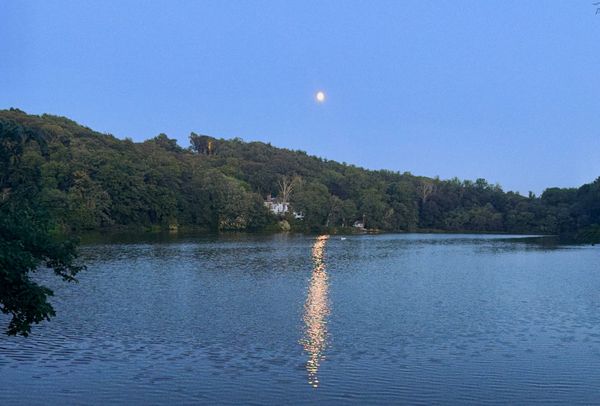
Our relationships are never generic. Back inside, my friends weren't stuffing envelopes for the environment. They were stuffing them for this pond: fourteen acres they could each walk the edge of, water with a name and a weir and a history they know. Hopefully, you have a wild place you love. And you know its name. Coyote Ridge. Or Dublin Lake. Or Tibbets Knob. Someplace wild and meaningful where the distance between you and the rest of creation dissolves.
The flock isn't bound by loving flocks in general. It is bound by dozens of egrets, each one choosing the same one tree. A son doesn't call fathers in general. He calls his father, and his father cannot get where he's going without that one particular call. We get there together, all of us, or we don't get there at all. And the "we" was never abstract. It has your name in it, and mine, and Wood's, and the egret's, and this one pond's.
A Prayer
God who binds us to a destiny we did not choose, and calls each of us by name within it: forgive the ease with which we love the idea of the world and neglect the one shoreline in front of us. Teach us that we rise together only because we first loved each other in particular, this child, this friend, this water and that the two loves are never in competition. Through Christ, who did not die for humanity in the abstract, but for you, and for me, and for the whole particular, bound-together watershed we are called to tend. Amen.
Sunday Reflections: What the Pond Can Teach Us is a weekly series from The Rev. Gideon L. K. Pollach, Rector of St. John's Episcopal Church, Cold Spring Harbor. Prefer to listen? Find this week's audio reflection here.