Ten Out of Three Hundred
Last October, my youngest daughter, Byrd, and I planted three hundred tulip bulbs in the ground. Three hundred. We were on our knees in the dirt for the better part of a weekend The final count, I can now confirm, is ten. Ten out of three hundred.

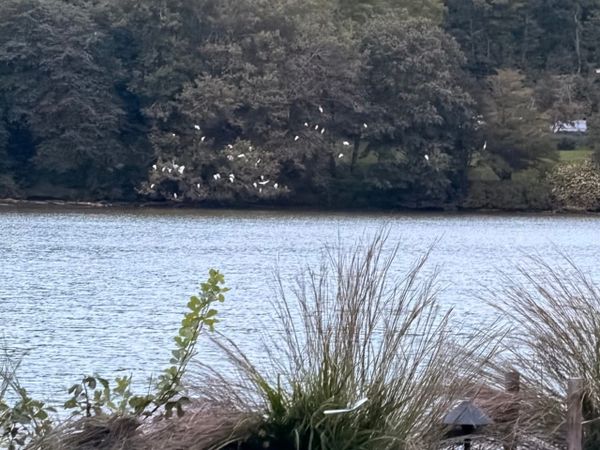
Wayne and Doug are stretching silver mylar tape between wooden posts in the pond edge garden. One line at six inches off the ground, another at eighteen. The tape catches the morning light and flashes. That is the point. The geese, who have been treating our garden as a salad bar for weeks, are meant to see the flash and decide to eat somewhere else.
It’s not a fence. It is barely a suggestion.
Two silver lines, set at the height where a goose's eye actually meets the world, asking them, not telling them, to move along. When the plants are tall enough to stand on their own, the tape will come down.
That is the part I keep thinking about. A guardrail with a built-in expiration date.
Our apple trees are past peak now. The peach is moving past blossom. The pond is quiet this morning. The trees are getting more confidently green by the day. Spring is doing the thing spring does: moving, whether we are ready or not, into whatever comes next.
And the verdict on the tulips is in.
Last October, my youngest daughter, Byrd, and I planted three hundred tulip bulbs in the ground. Three hundred. We were on our knees in the dirt for the better part of a weekend. She was still eager enough to be enthusiastic about garden work, which is a window that closes faster than you expect. As we planted, we talked about how many flowers we'd get in the spring. We were optimistic in the way only people with shovels and zero horticultural credentials can be.
The final count, I can now confirm, is ten.
Ten out of three hundred. I am not a horticulturalist, but I can do the math.
That is a 3.3% return rate, which in any other context would suggest I should consider a different vocation.
The deer made the call. They didn't dig anything up. They waited. They let the bulbs do their slow work in the dark, let the stems push up through the cold ground, let the buds form. And then, right when the flowers arrived, the deer took them. There are stems standing at full height in the flower beds with nothing on top. Little green flagpoles, nothing to fly.
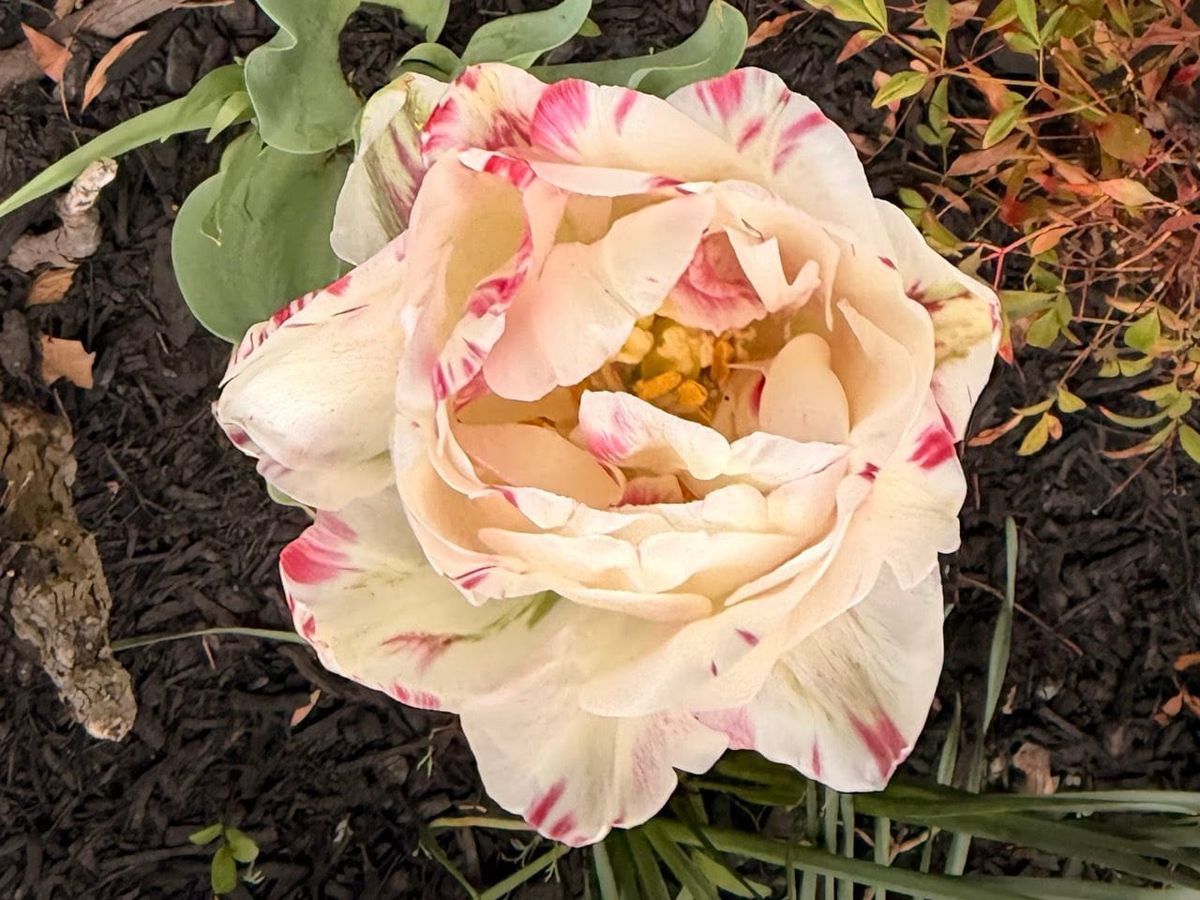
Here is the thing, though. I went out this week to look at them. The ten survivors. And they are not modest, apologetic flowers. They are show offs. One of them is fringed. A fringed orange tulip the size of a small fist, with a yellow fringe so improbable it looks like someone described it to a flower that had never seen one. Another is white and streaked with pink, full and ruffled like a peony. Whatever 290 of these bulbs failed to do, the ten that made it are doing it with everything they have.
I'll be honest with you: I think we got nearly three hundred tulips' worth of satisfaction out of the ten that made it. The math doesn't work, but the math isn't the measure.
Byrd is exhausted right now between crew, school, taekwondo, a school calendar that has run out of things to look forward between now and June. She is, on a normal week, a force of nature — bright and unruly, with hair that is its own weather system with a heart to match. She is most herself when she is least contained, and that is, as far as I can tell, exactly the point. So when she is tired, everyone notices. It's not the noise or the volume going down, it's like the weather changing. She's not failing. She's tired. There is a difference. This is the long stretch — past the spring break payoff, before summer's release — and you can see it on her at the end of every day.
What I want to tell her, and don't quite know how, is that this is what tending looks like. You and I planted three hundred bulbs and got ten flowers, and those ten are extraordinary. The math will not always justify the effort. The return rate is not the verdict. Some of what you put in the ground simply doesn't come back, and some of it comes back so brightly you forget for a moment that you ever doubted.
That is what tending is. Not the rescue. Not the percentage. The presence. The mylar tape between the posts. The Saturday in the dirt last October. The driving to crew practice when everyone is too tired. The showing up for the season nobody is enjoying yet.
We will check the tape tomorrow and the day after, and the day after that, until the plants don't need it anymore. Byrd, and Peyton, and Wood will keep getting up and going to school, because that's the deal. Plant now. Fruit later.
The ten tulips will keep doing what they are doing, with a brilliance that has nothing to do with the 290 that didn't make it. And somewhere underneath all of it, the ground will be doing whatever the ground decides to do this year.
Three hundred bulbs in the fall. Ten flowers in the spring. Two silver lines at the goose's eye level. One tired daughter. This is what tending actually looks like, when nobody is watching, and the return rate makes no sense.
A Prayer:
God of the silver tape and the ten survivors — who tends what is small and slow and not yet able to stand — teach us the patience of guardrails. Show us how to hold the line for what cannot yet hold its own. When our return rate disappoints us, when our children are tired, when the season will not release us yet, give us the grace to count what came back rather than what did not. Through Christ, who told us to consider the lilies, and the birds, and the mustard seed. Amen.