Site Fidelity
A sound from somewhere in the pines. That liquid, emphatic whistle that Baltimore Orioles make, too bright for early May. Then a movement. Then that color: orange so saturated it looks wrong against the needles.

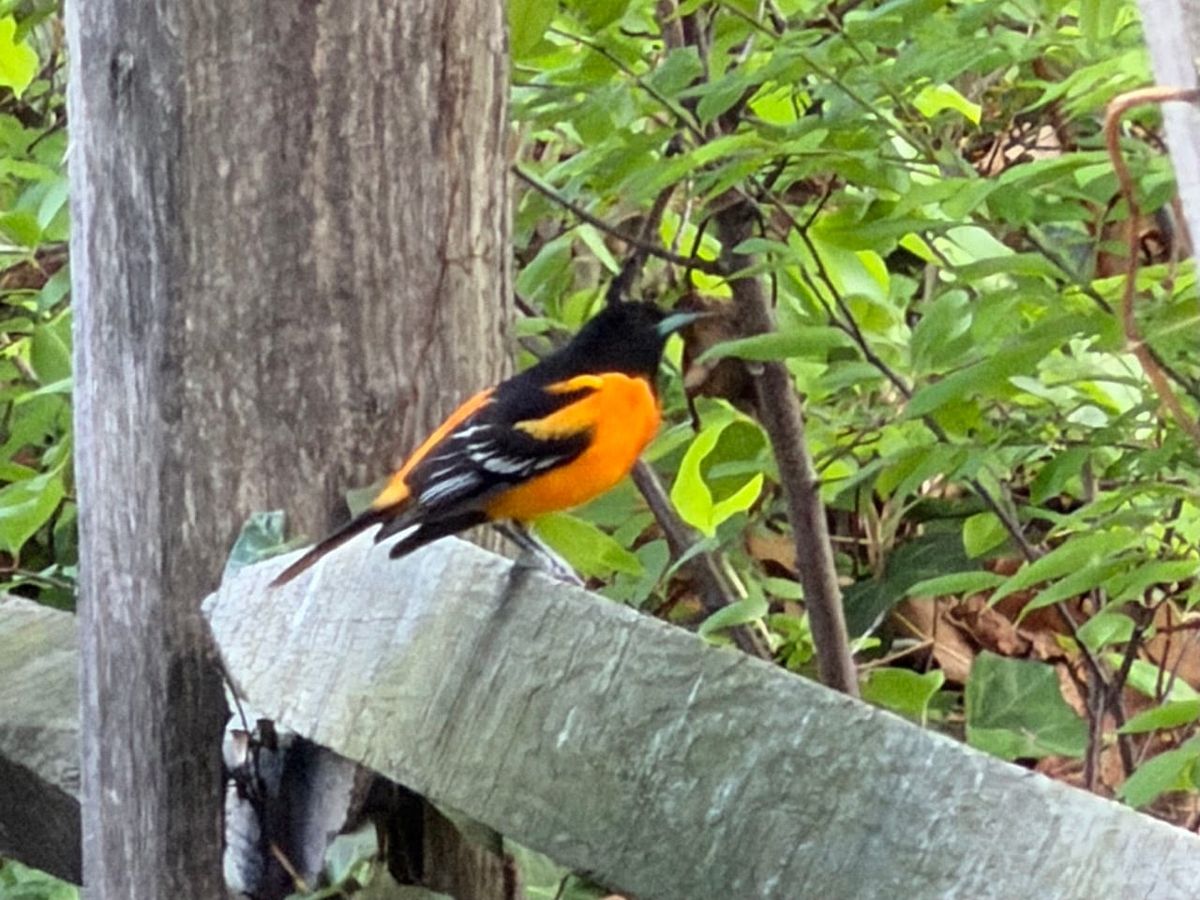
A sound from somewhere in the pines. That liquid, emphatic whistle that Baltimore Orioles make, too bright for early May. Then a movement. Then that color: orange so saturated it looks wrong against the needles.
We've been seeing this bird for a few years now. Which raises a question I've been sitting with all week.
Is this the same bird?
Baltimore Orioles are known for what biologists call site fidelity — a strong, consistent tendency to return to the same territory year after year. An adult Baltimore Oriole can live eleven or twelve years. Which means, if you've been seeing orioles in the same spot for several years running, you may well be looking at the same individual. Coming back. Keeping its appointment.
I've been thinking about the word fidelity.
We use it almost entirely in human contexts. Marital fidelity. Fidelity to a promise. Fidelity to a vow. It carries the weight of moral choice, of deliberate commitment sustained over time. When we say someone has been faithful, we mean something about character.
But here is a creature whose faithfulness is written into its biology. The oriole doesn't deliberate. It doesn't weigh the options. It comes back because that is what it does.
The oriole isn't alone in this. Consider the Arctic tern. It completes a pole-to-pole migration of 70,000 miles every year from the Arctic to the Antarctic and back, navigating by stars and magnetic fields, returning to the same nesting ground each time, with capacities we are still learning to describe. Seventy thousand miles. The same spot at the end of it.
The tradition has a name for that kind of return. We call it faithfulness.
I mean that seriously, not as a metaphor. The psalms don't invite creation to praise God. They command it — on the assumption that creation is already capable of doing so, already oriented toward its Creator. The mountain doesn't decide to declare glory. It declares glory by being a mountain. The tern doesn't choose to be faithful. It enacts fidelity with its body, its navigation, its annual return.
This praise is not conscious. The oriole does not know it is praising. The tern does not know it is enacting something that looks, from the outside, like devotion. But the action is real regardless. That is perhaps the point. The faithfulness doesn't require awareness to be faithfulness.
Or the American eel. Born in the Sargasso Sea, carried by ocean currents to the estuaries and ponds of Long Island, living in freshwater for decades, then returning to the deep ocean to spawn and die. The eel knows the shape of home. It holds that knowledge in its body.
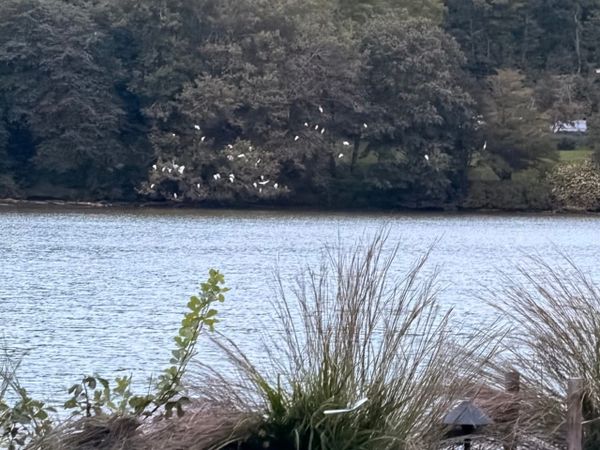
We have eels in St. John's Pond. We don't know exactly how they got there. Maybe an osprey or an eagle dropped one. Maybe — and this is a real possibility with eels — they climbed. American eels can move over wet ground, over rocks, over obstacles that would stop any other fish. They are that determined to reach the water they are seeking.
The dam at the north end of our pond was not designed to welcome them. And yet.
We are working with engineers and ecologists right now on the question of fish passage at that dam. A way to open the watershed to the alewife and the blueback herring who were once part of this system and are trying to return. The eel got through somehow. The others are waiting.
What then is the human contribution to all of this?
We can know. We can also simply stop — reverent, a little undone — in front of this incalculable mystery with the bright orange breast. We can receive what the oriole does and name it. We can stand under a pine tree in early May and recognize that what just arrived on the branch above us has been keeping an appointment — one it didn't make, that no one can cancel, that holds whether or not we're there to witness it. We can hear the sound before we see the bird.
On the St. John's Pond Watershed Alliance website, we say this: every drop of water that falls in the watershed eventually comes here. And so do we.
A Prayer:
God of the returning — you have written fidelity into the bodies of your creatures: the oriole that finds its tree, the tern that crosses the world, the eel that climbs what it cannot swim past to reach the water that is home. Teach us to know that we are drawn as they are drawn — that what we call our longing is your calling. Make us faithful returners. With Christ, our companion on the journey and our guide in the return. Amen.