Remember You Are Dust
We've entered the stage of winter that nobody writes poems about: too warm for beauty, too cold for growth. Just a mess.

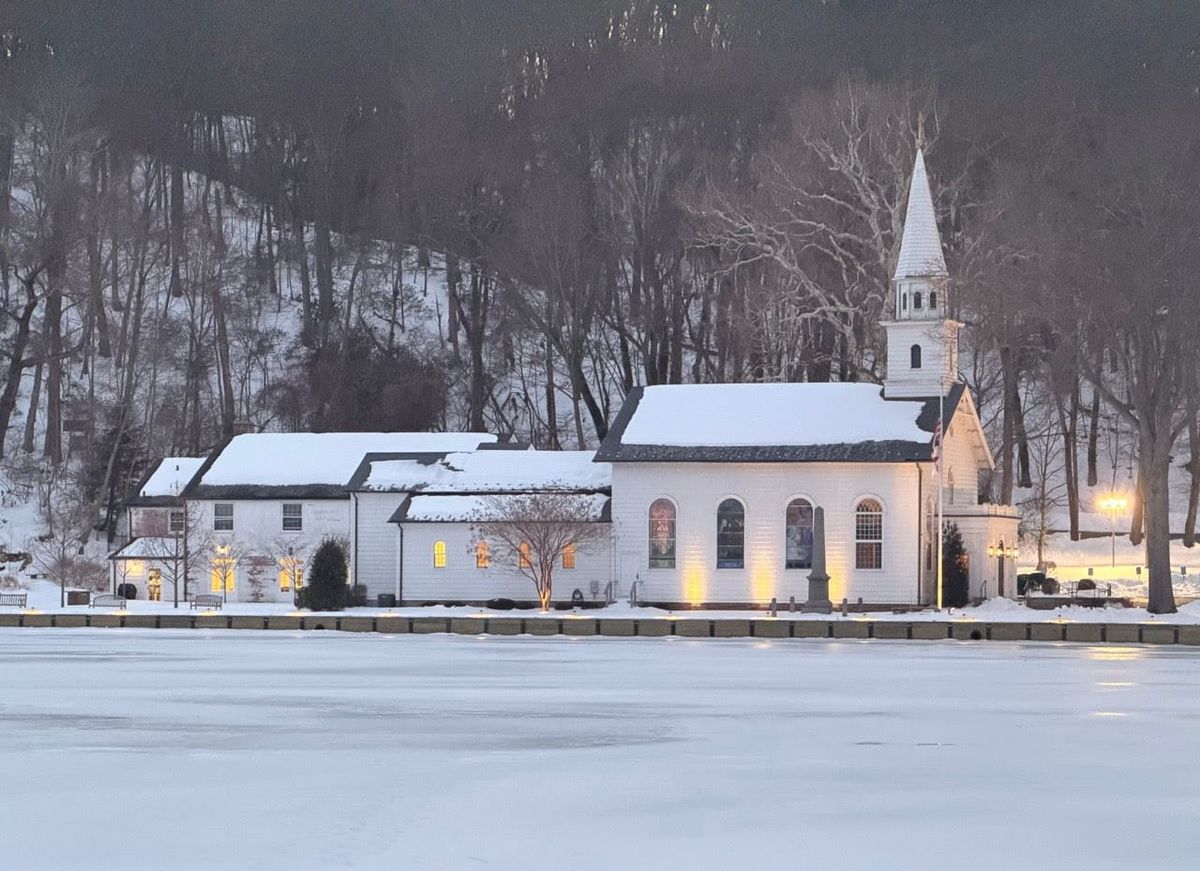
The freeze broke this week. After three solid weeks of ice, the pond's surface is finally softening — not dramatically, not with any announcement, but in the quietest way possible: puddles forming on top of ice. Water sitting on what is still frozen, waiting ro find a way through.
It is not beautiful. The snow is receding from the edges in uneven patches, exposing mud and matted leaves. The light is gray. Our dog, who two weeks ago had to be coaxed outside at all, is now spending more time in the yard — but with the resigned look of someone who's past the fun part and into the work of waiting.
We've entered the stage of winter that nobody writes poems about: too warm for beauty, too cold for growth. Just a mess.
On Wednesday morning, a volunteer from the Department of Environmental Conservation was at the pond conducting a muskrat survey — counting the lodges, estimating the population of creatures most of us never think about.
Whenever anyone spots one swimming across the pond, they always hope it's an otter — something playful and charming, something worth posting about. I never have the heart to tell them that no, they’re just muskrats. But the tail gives them away to anyone who knows, cutting a triangular wake through the water as they power across the surface.
They are not otters. They are small, furred animals that spend their lives in the mud and sediment, building homes out of the muck, feeding on the roots of things. And someone thought they mattered enough to come out on a gray February morning and count them.
This coming Wednesday, we will gather in church for a different kind of survey. A thumb will press ashes of palm dust onto our foreheads, and a priest will say the oldest inventory there is: Remember that you are dust, and to dust you shall return.
Most of us flinch at this. It sounds like a verdict. But the truth of it invites us into deeper mystery.
Our pond has been teaching us something about dust all winter. Dust is not a sentence. It is where we come from.
In Hebrew, the first human is called Adam — not a proper name at first, but a description. Earth-creature, drawn from adamah, the ground itself. We are made of what the muskrats build their homes in. Our dust is the same dust where seeds wait through winter, where nutrients cycle back into life, where everything that falls eventually feeds what rises.
The pond's sediment is not waste. It is where life begins again. The mud the snow is revealing at the water's edge this week is the same mud that will grow irises in May. The muck that the muskrats burrow into is shelter, not shame. And the ash on our foreheads on Wednesday is not God reminding us of our failure. It is God reminding us of our address.
You are dust now. You were dust then. You will be dust again. Invaluable dust.
Now, on the threshold of Lent, the pond is doing what it always does — teaching us before we knew we needed it. The puddles on the ice, the mud at the edges, the muskrats in their lodges. The pond holds what falls. It waits. It feeds what comes next.
Right now it is mud. Soon it will be abundance.
But until then, we wait.
When you receive those ashes on Wednesday, let them feel less like a warning and more like a homecoming. You are an earth-creature. You belong to the mud and the watershed and the long patience of sediment doing its quiet work. That is not a thing to be ashamed of.
It is, if the pond is any teacher, the very ground where God does the most with the least — where death becomes life, where falling becomes rising, where dust becomes everything.
A Prayer
God of dust and sediment, you formed us from the earth and called it good, shaping earth-creatures to bear your image in mud and breath and bone. As we receive ashes this week, help us hear not a verdict but a homecoming — that we belong to the ground, and the ground belongs to you. Teach us the patience of sediment, where everything that falls becomes the soil for what will rise. Through Christ, who was laid in the earth and rose as the firstfruits of a creation made whole. Amen.