A Rescue
The bird was disoriented. Turns out he'd hit his head, we'd learn later. And from where he sat in the Pachysandra, two large mammals descending on him with barbecue gloves and towels probably did not read as rescue. He waddled away from us as quickly as a waterbird can on land.

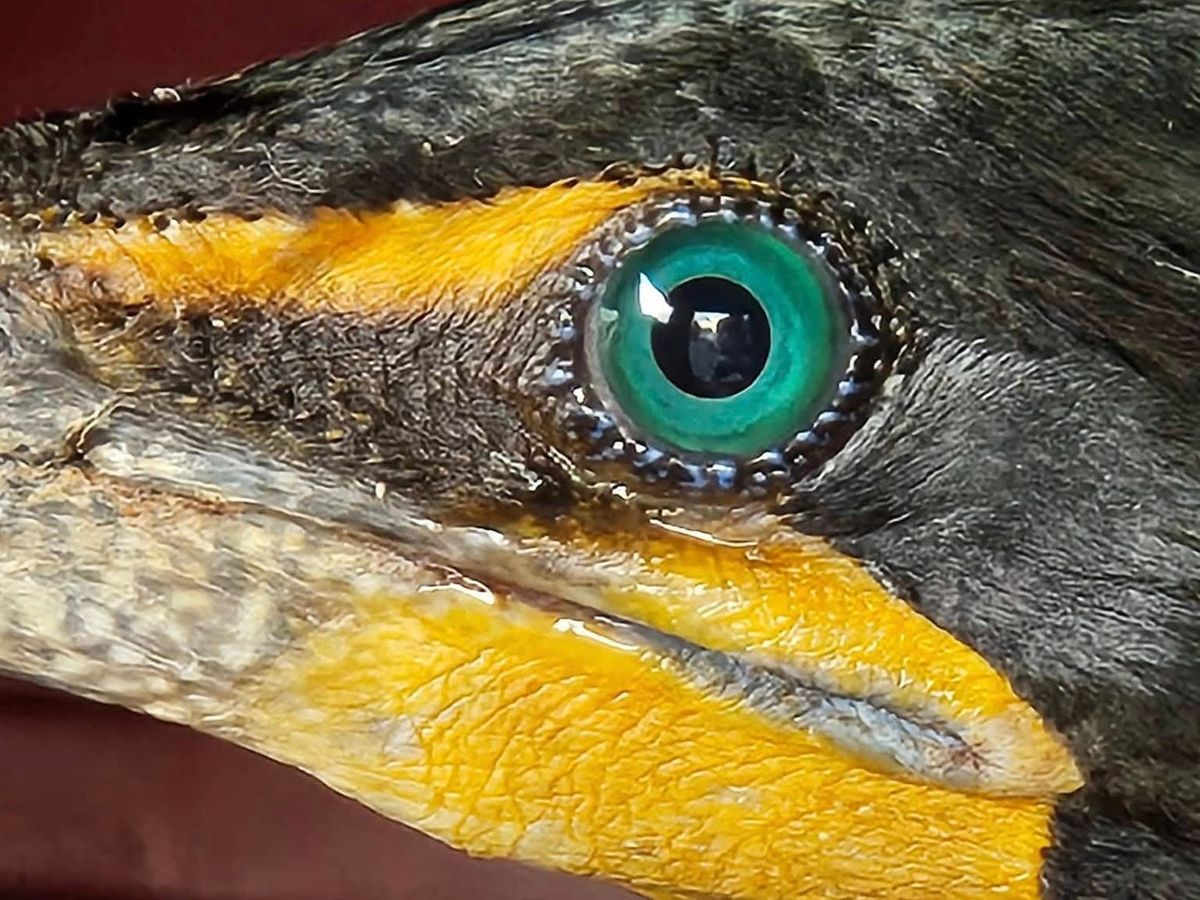
Earlier this week, our parish administrator, Kim, came to find me with a concerned look on her face. There was a double-crested cormorant, she said, in the sunken garden by the church. In the Pachysandra. He couldn't seem to get out.
I called my son Woodford, who is eighteen, a veteran observer of many similar rescues, and a Boy Scout. He knew exactly where the barbecue gloves and lab goggles were for this kind of situation. He is always prepared. What we didn’t have was any way to tell the cormorant that we were there to help.
I don't speak cormorant. Neither does Wood. If only.
The bird was disoriented. Turns out he'd hit his head, we'd learn later. And from where he sat in the Pachysandra, two large mammals descending on him with barbecue gloves and towels probably did not read as rescue. He waddled away from us as quickly as a waterbird can on land.
We were well-intentioned. We were also not helping. After a while, I made the call that good intentions sometimes require: I called people who actually knew what they were doing.
The wildlife rescuers arrived about forty-five minutes later. They were calm in a way that Woodford and I had not been. They knew how to approach a frightened bird. They knew what a dazed cormorant needs: fluids and quiet and time. Not a man and his teenage son with barbecue equipment.
They took him to a wildlife veterinarian, who confirmed the head injury and they got him stabilized.
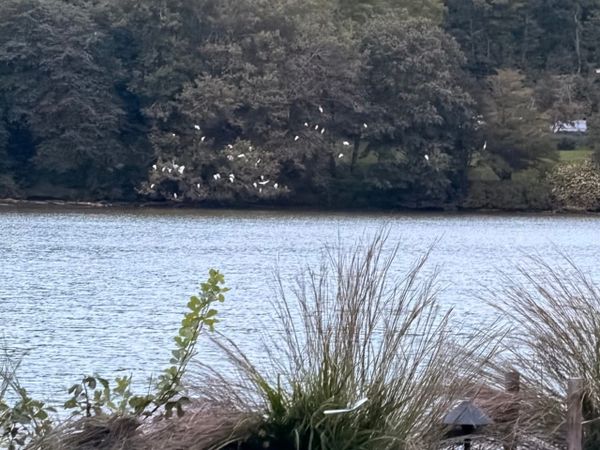
Then they brought him back to the pond and let him go.
I wasn't there for the release, but they sent me a video.
The cormorant sat at the water's edge for a moment. He didn't run away. He turned and looked back at the rescuer, the one who had actually helped him. Then he looked out at the water. He hesitated. And then he flew.
Today is the day of Pentecost, the feast of the Paraclete, not Parakeet, though I understand the confusion. The word paraclete means the one who comes alongside. The Comforter. The one Jesus promises will arrive and do what the disciples, despite all their love and good intentions, could not do for themselves or for each other.
I've been thinking about that word: alongside.
Not above, not managing from a distance, not arriving with a plan, but alongside. The rescuers didn't fix the cormorant through force of will. They came alongside him in his confusion and in theirs. And in his fear and in theirs, and they knew, in ways I did not, what he needed to find his way back.
The Spirit works like that. Not always with wind and fire, though sometimes. Often quietly, through the person who arrives forty-five minutes after your own efforts have run out, and who knows something you don't, and who asks for nothing except that you step back and let them work.
A Prayer
God of wind and water, you send your Spirit not to solve us but to find us, dazed, out of place, in need of what we cannot provide for ourselves. Teach us to receive what we can’t generate, to step back when stepping back is love, and to trust the one who comes alongside. Through Christ, who did not leave us to manage alone, but promised us a Comforter and kept that promise. Amen.